
Dice Connect - Sequence Twist
FunCraft GamesBoard
4.9406.00 Reviews
- Version
- 1.2.25127
- Installs
- 100.00K
- Age Rating
- Everyone
Screenshots
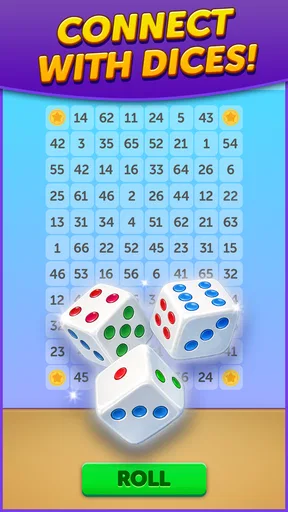

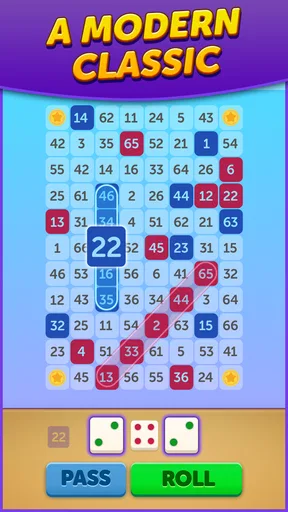

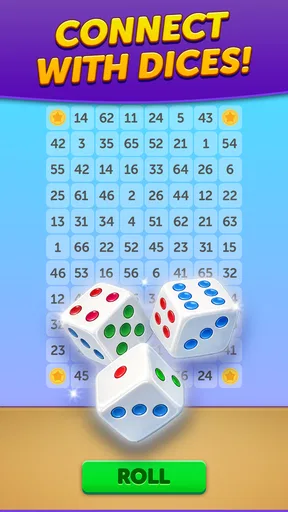

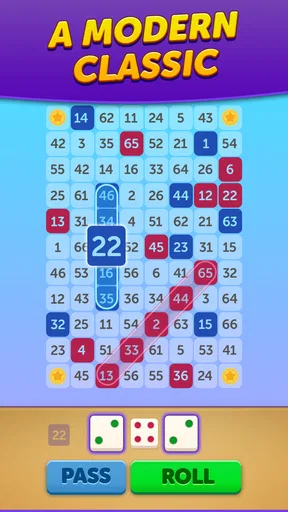

Our Review of Dice Connect - Sequence Twist
 Analysis by Appyee
I went into Dice Connect - Sequence Twist expecting a quick board-game distraction, and that is exactly where it works best. It is a free dice-based strategy game from FunCraft Games, built around the simple idea of planning a connected route instead of relying on a lucky roll alone. The rules are approachable, but the decisions become more interesting once I started thinking about future turns rather than only the move in front of me.
That balance makes it easy to recommend to someone who enjoys compact board games but does not want a complicated rulebook. At the same time, it is not a replacement for a deep tabletop strategy title. Its appeal comes from short, focused decisions, and players looking for a large campaign, a rich story, or highly detailed tactical systems may find the experience too narrow.
How the current game feels to play
The central challenge is turning dice results into a usable sequence. A roll gives me possibilities, but the important question is where that result belongs in the developing path. Connecting one area can open a useful route while leaving another section awkwardly isolated, so I found myself weighing immediate progress against the shape of the board several turns later.
That is the part that separates this from a purely luck-driven dice game. The dice decide what I have to work with, but they do not completely decide whether my turn is good. I need to notice open connections, avoid creating dead ends, and preserve flexibility when the board becomes crowded. The strongest moves are often the ones that look modest at first but keep several future options available.
The presentation is also easy to understand. As a board game aimed at Everyone, it has a natural place in casual family play, quick breaks, and relaxed sessions with people who may not normally play strategy games. I would still explain the basic objective before handing over the phone, because the difference between placing something that merely fits and building a useful sequence is where the game’s strategy begins.
One practical way I played was to treat each turn as a small planning exercise. First I checked which connection was most urgent, then I considered whether using the current result there would restrict the next likely move. This habit made the game feel more deliberate without making it slow. It is a useful approach for new players because it teaches the underlying trade-off naturally: progress matters, but flexibility matters too.
A good fit for short, thoughtful sessions
I can see this working well during a commute, a coffee break, or a few minutes at home when I want something more engaging than a match-three game. The board-game format gives each decision a clear purpose, while the dice keep the experience from becoming a perfectly predictable puzzle. I never needed to memorize a complicated set of systems before I could start making meaningful choices.
It is also suitable for players who like replaying a familiar structure and improving their judgment. The enjoyment is less about discovering a huge world and more about asking whether I can make a better sequence from the situation in front of me. That makes it approachable, although players who need constant novelty may eventually want more variety than this focused concept provides.
The game’s strong store reception supports that approachable identity. It holds a 4.9 average from around 5.1 thousand ratings, with over 400 written reviews and more than 100 thousand installs. Those figures do not prove that every player will enjoy it, but they do suggest that the basic loop is connecting with a substantial audience rather than being difficult to understand or immediately frustrating.
Where the strategy hides
The first non-obvious lesson is that the most attractive connection is not always the best one. I initially wanted to complete visible sections as quickly as possible, but that could leave the remaining route fragmented. A better approach is to identify the board’s constrained areas early. If one side offers fewer practical ways forward, I try to protect it before spending a flexible result on an easier connection.
The second lesson is to value future choices. A move that creates two possible continuations can be stronger than one that completes a single segment immediately. This is especially useful when the dice produce an awkward result. Instead of treating an imperfect roll as wasted, I look for a placement that keeps the board adaptable. That turns uncertainty into a planning problem rather than a simple win-or-lose moment.
The third insight concerns risk. Sometimes I deliberately take a less efficient route because it avoids depending on one very specific future result. That trade-off will not always be correct, but it is a practical way to reduce the feeling that the outcome rests on one lucky roll. Players who prefer calculated, resilient plans should enjoy this layer more than players who only chase the fastest visible completion.
I also recommend pausing briefly before confirming a placement, particularly when two locations appear equally valid. In a dice board game, speed can feel satisfying, but a quick move can close an important route. My most consistent improvement came from checking the next connection rather than staring only at the current one. That tiny change made the game feel more strategic without requiring any advanced knowledge.
What the latest release means for players
The current version is 1.2.25127, and the game was released on February 9, 2026. Because it is still a relatively young product, I view it as a title that is establishing its identity rather than one with a long history of accumulated systems. That is important when deciding whether to install it: the core idea is already clear, but long-term players may be more interested in how FunCraft Games develops the experience from here.
I would not read the version number as a promise of a particular feature set. What I can say is that the current build presents a focused dice-and-connection concept, and the sensible way to judge it is by whether that loop suits you today. If you enjoy the central decisions, the game has a clean foundation. If you need extensive modes or a large amount of content immediately, its early, concentrated design may feel limited.
The minimum operating-system requirement is Android 7.0, which makes the game accessible to many older Android devices. That is useful for families sharing a range of phones or for anyone who keeps a reliable older handset instead of upgrading frequently. I would still pay attention to how the game feels on your particular device, since broad compatibility does not automatically mean every screen size or performance profile will feel equally comfortable.
The free entry price is another strength. I could approach it as a low-risk download, learn the rules, and decide whether the board loop deserves regular play without paying upfront. There are in-app purchases ranging from $0.49 to $49.99 per item, so I would be careful around optional spending, especially if children use the device. The free starting point is convenient, but the presence of purchases means I would not describe the entire experience as cost-free in every situation.
How existing players may experience the update path
For someone already playing, the current version is best understood as the present baseline rather than a reason to expect a completely different game. Existing users who enjoy the route-building decisions should find the identity familiar: the satisfaction still comes from making a useful sequence out of uncertain dice results. I would approach any update with the expectation of refinement and continued development, not assume that it changes the fundamental way the board is played.
New players have a different advantage. They can learn the current rules without comparing them with earlier builds, which makes it easier to form good habits from the start. I would begin by prioritizing open-ended placements, then gradually experiment with faster but riskier connections. That learning order helps reveal whether the game’s strategic style matches your preferences before you spend time trying to optimize every move.
One thing I appreciate about a focused design is that improvement is easy to observe. I can tell when I am making better decisions because I begin to recognize dangerous gaps earlier and stop wasting flexible opportunities on obvious placements. The game does not need a huge collection of mechanics to offer that kind of progression. Its challenge comes from seeing the board more clearly.
However, that same focus can affect long-term motivation. If you prefer unlocking characters, collecting equipment, following a narrative, or learning several distinct rule systems, this will not provide the same kind of progression as a larger board-game adaptation or a strategy campaign. I would choose it for repeatable decision-making, not for a constant stream of new objectives.
Where it still has room to grow
The main limitation is the narrowness of the premise. Connecting a route with dice is a neat foundation, but the experience depends heavily on whether you enjoy repeating that decision pattern. Players who want social interaction, elaborate player powers, or a changing story may find the board too self-contained. In those cases, a multiplayer-focused board game or a deeper digital adaptation would probably be a better choice.
Luck is another point to consider. Strategic placement can improve a position, but dice still introduce uncertainty. That is part of the charm, yet it can also frustrate players who want every result to be completely controllable. I would skip this one if random outcomes make you feel that careful planning has been undermined, because the game’s tension comes precisely from adapting to imperfect results.
The monetization model deserves a measured approach as well. Since the game is free to start and includes purchases from a small amount up to a much larger single-item price, I would set spending limits before letting a child play or before making it a regular habit. The presence of purchases does not by itself make the game unsuitable, but it is a practical consideration when choosing between this and a paid game with a simpler cost structure.
I would also avoid judging it solely by its rating. A 4.9 average is encouraging, but ratings usually reflect broad satisfaction rather than whether the game matches a particular player’s taste. Someone who loves concise board puzzles may find it immediately appealing, while someone searching for a large, content-heavy strategy experience may still be disappointed. The right question is not whether it is popular; it is whether its compact dice decisions are the kind of challenge you want.
Who should install it, and who should pass
I recommend it to casual board-game fans, families looking for an accessible strategy activity, and mobile players who like making a few meaningful choices at a time. It is especially suitable if you enjoy games that are simple to begin but reward better planning after several sessions. The age rating of Everyone also makes it a reasonable candidate for shared devices, provided an adult manages the purchase settings.
I would be more cautious if you want a story, competitive online interaction, a long campaign, or a large set of distinct modes. This is not the game I would pick for a group seeking the social energy of a digital tabletop room. I would also skip it if you dislike dice-based uncertainty or if you quickly lose interest when a game’s main idea remains consistent from session to session.
Compared with a traditional physical board game, it is more convenient and less demanding to set up. There is no need to find a table, sort pieces, or persuade several people to learn the rules at once. Compared with a pure dice roller, it asks more from me because the placement decisions shape the route. Compared with a complex strategy app, it is lighter, faster to understand, and less satisfying for players who want layered economies or long-term campaigns.
What I would watch next
Because the release is recent and the current version is still establishing the game’s direction, I would watch how FunCraft Games handles variety and long-term engagement. The most valuable future progress would be anything that gives experienced players fresh reasons to think without burying the clean route-building idea under unnecessary complexity. I would rather see thoughtful expansion of the central decision than a collection of unrelated systems.
I would also pay attention to how the game feels after the initial learning period. A strong first impression is useful, but the real test is whether the board continues to create interesting trade-offs once the basic placement habits become familiar. For me, continued appeal depends on having enough situations where the safest move, fastest move, and most flexible move are not the same choice.
My final view is positive but specific: Dice Connect - Sequence Twist is a promising free board game for players who want accessible strategy built around uncertain rolls and careful connections. I like that it gives luck a role without making planning meaningless, and I found the best moments came from preserving options rather than chasing immediate completion.
I would install it when I want a compact thinking game, and I would recommend it to a friend who enjoys board puzzles but does not want a demanding rules-heavy title. I would not present it as a universal replacement for deeper strategy games. Its value lies in its focused loop, low entry barrier, and the small decisions that gradually become more intelligent. If that sounds like your kind of play, the free download makes it easy to try; just keep the optional purchase range in mind and judge the game by how much you enjoy building the next connection.
Verdict
Strengths of Dice Connect - Sequence Twist
- Simple rules make it easy for new players to start quickly.
- Short rounds are convenient for casual play sessions.
- Dice-based mechanics add variety to each turn.
- Strategic tile placement keeps matches engaging.
- Colorful visuals make the board easy to follow.
Limitations of Dice Connect - Sequence Twist
- Random dice rolls can sometimes outweigh careful planning.
- Progress may feel repetitive after extended play.
- Some levels can become noticeably more challenging.
- Small board elements may be harder to read on phones.
- Requires patience when waiting for favorable combinations.
Other Releases by FunCraft Games
View All


Similar Picks in This Category
View All
Ludo King®
Gametion4.1

Ludo
Yarsa Games4.6

Tile Master® - Matching Game
Higgs Studio3.6

Checkers Online
CC Games4.6

Dominoes
Loop Games4.7

Chess
Chess Prince4.6
Frequently Asked Questions
What is Dice Connect - Sequence Twist?
Dice Connect - Sequence Twist is a casual puzzle game built around matching and connecting dice in the correct sequence. During our review, the gameplay felt easy to understand but increasingly challenging as boards became more crowded and objectives required more careful planning. It is designed for short sessions, making it suitable for players who enjoy relaxing number puzzles, strategic moves, and gradual progression rather than fast action or complex controls.
How do you play Dice Connect - Sequence Twist?
The main goal is to connect dice according to the sequence requested by the level. Players generally need to examine the available pieces, plan a route, and make moves without blocking important spaces or wasting useful combinations. Although the basic mechanics are beginner-friendly, later stages require better timing and forward planning. Reading the board before moving is especially helpful when several possible connections appear available.
Is Dice Connect - Sequence Twist free to download and play?
Dice Connect - Sequence Twist can be downloaded as a free game, although the exact availability of optional purchases, advertisements, or extra resources may depend on the version and platform. Players should check the store listing before installing because monetization details can change through updates. The game is suitable for casual play without requiring an immediate purchase, but optional in-app items may be offered for convenience or progression.
Does Dice Connect - Sequence Twist require an internet connection?
The game may support offline play for at least some of its puzzle content, which is convenient when traveling or when mobile data is unavailable. However, features such as advertisements, cloud synchronization, updates, leaderboards, or in-app purchases may require an internet connection. Because offline functionality can vary between versions, we recommend launching the game once while connected and checking which modes remain accessible without Wi-Fi or mobile data.
Is Dice Connect - Sequence Twist suitable for children and all age groups?
Dice Connect - Sequence Twist uses simple visual controls and number-based puzzle mechanics, so it can be approachable for children, teenagers, and adults. Nevertheless, parents should review the store rating, advertising behavior, and in-app purchase settings before allowing younger players to use it. The game is generally more focused on logic and concentration than reading-heavy content, but difficulty may become frustrating for players who prefer very simple puzzles.
Play our best games!


